
Jour de la Terre 2026 : Pourquoi le lin est le choix écologique par excellence pour la literie

En cette Journée de la Terre, réfléchissons à la manière dont un simple changement dans notre espace le plus intime – la chambre à coucher – peut avoir des répercussions sur la planète. Le véritable luxe en 2026 ne réside plus dans l'excès, mais dans la responsabilité et le choix de matériaux qui respectent la Terre autant qu'ils offrent un confort optimal.
Le lin est bien plus qu'un textile ; c'est une solution écologique. Voici comment cette fibre ancestrale redéfinit l'avenir d'un mode de vie durable.
1. Cultivé avec la nature, et non contre elle
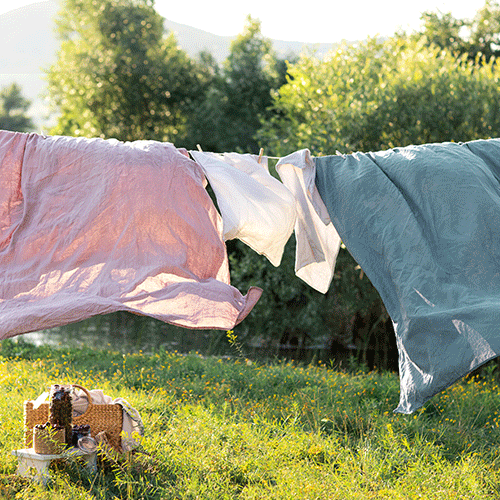
Alors que les textiles conventionnels nécessitent souvent une intervention importante, le lin est fabriqué à partir du lin, une plante résistante qui prospère grâce à la nature. Cultivé principalement dans les climats tempérés d'Europe occidentale, le lin ne requiert aucune irrigation artificielle et se nourrit uniquement de la rosée matinale et de l'eau de pluie. Cela représente une consommation d'eau inférieure d'environ 80 % à celle du coton, préservant ainsi l'une de nos ressources les plus précieuses tout en maintenant l'écosystème environnant intact.
2. Un puits de carbone naturel
Le lin est un champion de la séquestration du carbone. Durant son cycle de croissance rapide de 100 jours, il absorbe une quantité importante de CO₂ atmosphérique. En intégrant le lin à nos intérieurs, nous soutenons une agriculture régénératrice qui contribue activement à un air plus pur. C'est l'un des rares secteurs où la matière première participe à la restauration de l'environnement avant même d'être tissée.
3. L'usine zéro déchet
Le lin est un modèle d'efficacité biologique. Chaque élément de la récolte trouve sa place : les longues fibres servent à confectionner une litière respirante, les graines sont pressées pour en extraire des huiles nutritives et les résidus ligneux sont utilisés comme matériaux de construction écologiques ou comme biocarburant. Ce cycle de vie quasi zéro déchet garantit que le parcours de la plante, du sol au sanctuaire, ne laisse aucune trace significative.

4. Un sanctuaire pour la santé de la peau
La durabilité ne se limite pas à la santé des sols ; elle concerne aussi l'environnement le plus proche de votre corps. Naturellement hypoallergénique et à pH équilibré, le lin agit comme un prolongement naturel de votre peau. Contrairement aux fibres synthétiques qui peuvent retenir l'humidité et perturber le microbiome cutané, le lin biologique possède des propriétés antibactériennes intrinsèques. Il résiste activement aux acariens et aux allergènes, créant ainsi un havre de paix pour les peaux sensibles. Dans un monde où les produits chimiques sont omniprésents, le lin offre le luxe de la pureté.
5. Un sommeil sain, naturellement
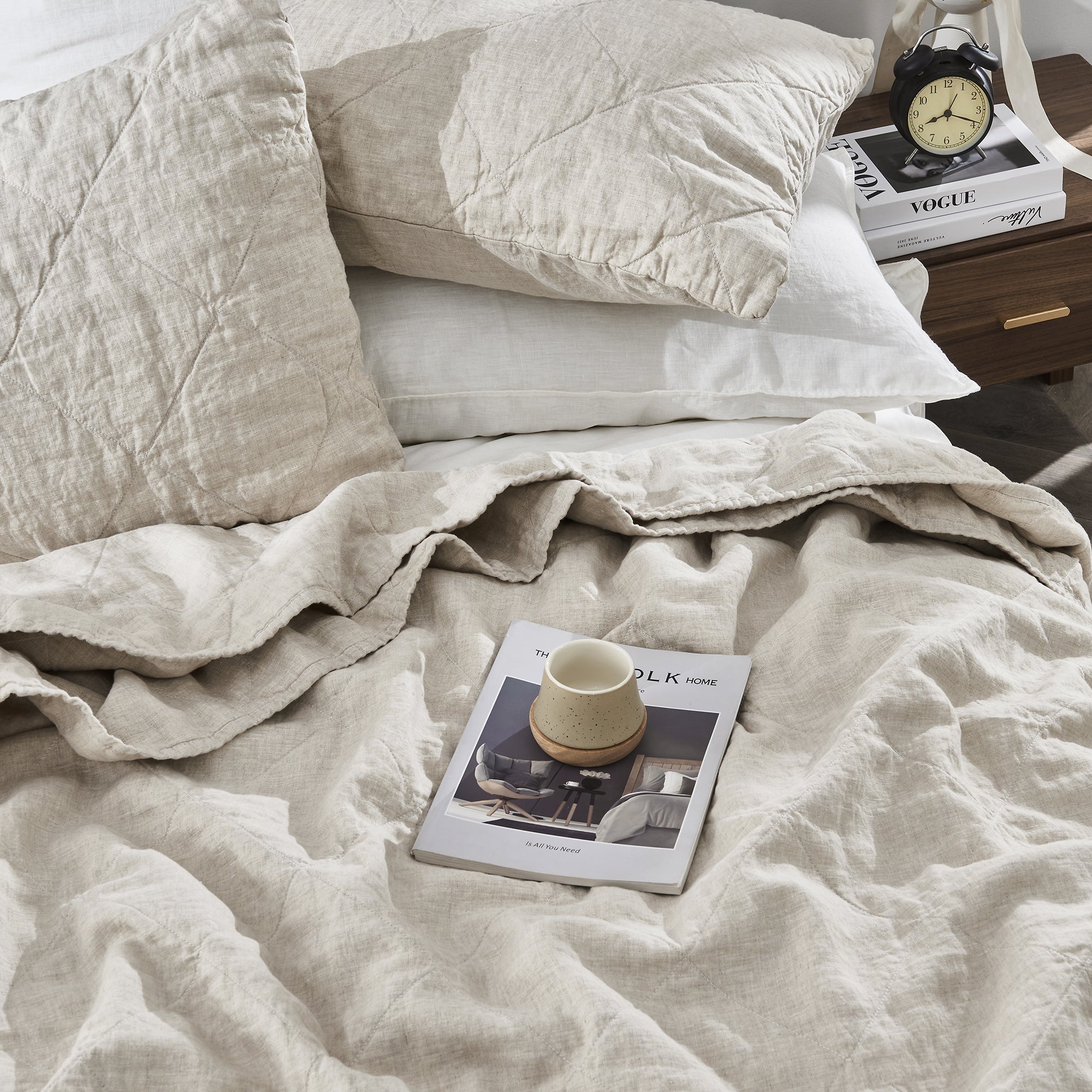
Votre peau mérite la même pureté que la terre. Naturellement hypoallergénique et antibactérien, le lin inhibe efficacement la prolifération des moisissures, des champignons et des acariens. Ses fibres respirantes et thermorégulatrices réduisent le recours à la climatisation énergivore, tandis que ses propriétés d'évacuation de l'humidité garantissent un environnement de sommeil confortable et aéré, favorisant un sommeil plus profond et réparateur.

Le choix conscient
La durabilité n'est pas synonyme de perfection, mais de choix responsables. Choisir du lin biologique de haute qualité, c'est investir dans une matière certifiée OEKO-TEX®, exempte de produits chimiques agressifs et respectueuse des cycles naturels.
En avril, nous vous invitons à explorer une façon plus consciente de vous reposer, une façon qui prend soin de votre peau et respecte l'environnement.
→Découvrez la beauté brute du lin biologique. Notre chemin vers un avenir plus durable