Article: Nuits d'été collantes ? Pourquoi la climatisation naturelle de votre corps a besoin de lin
Nuits d'été collantes ? Pourquoi la climatisation naturelle de votre corps a besoin de lin
Vous arrive-t-il souvent de vous réveiller aux petites heures du matin en vous sentant collant et étouffé, comme si vous étiez piégé dans un hammam étouffant ? Vous jetez un coup d'œil au thermostat, la température est clairement réglée comme il faut. Pourtant, votre lit ressemble moins à un havre de paix chaud qu'à une serre.
Avec l'arrivée de juin, un léger changement se fait sentir dans l'air. Lorsque les gens parlent de l'été, ils pensent généralement à la chaleur, mais le véritable coupable qui gâche le sommeil estival est souvent plus subtil, oppressant et gênant : l'humidité.
Lorsque l'air est trop humide, cela ne modifie pas seulement la météo extérieure, mais perturbe également complètement les mécanismes de refroidissement interne du corps. Si vous voulez retrouver un sommeil profond et réparateur sans transformer votre chambre en un « congélateur » froid et humide, la solution ne réside pas dans la climatisation, mais dans les tissus de vos vêtements et de votre literie.
Voici la science derrière la façon dont l'humidité affecte le sommeil, et pourquoi le choix du lin biologique respirant est votre meilleur pari pour un sommeil frais et réparateur.
1. Le voleur de sommeil invisible : comment l'humidité affecte le sommeil
Pour comprendre pourquoi une humidité élevée entraîne des retournements incessants et des difficultés à s'endormir, nous devons d'abord comprendre comment le corps humain s'endort.
Dans le cadre du rythme circadien naturel du corps, votre température corporelle centrale doit baisser d'environ 1 à 2 degrés Fahrenheit pour initier et maintenir un sommeil profond. Pour ce faire, votre corps dilate les vaisseaux sanguins près de la peau pour libérer de la chaleur, souvent accompagnée d'une fine couche de sueur invisible. Dans un environnement idéal, cette humidité s'évapore rapidement dans l'air, emportant la chaleur.
Cependant, lorsque l'humidité relative dépasse 60 %, l'air est déjà saturé de vapeur d'eau. Votre sueur n'a nulle part où aller. Au lieu de s'évaporer pour vous rafraîchir, elle piège la chaleur contre votre peau, envoyant un faux signal de « stress thermique » à votre cerveau. Votre rythme cardiaque augmente, votre corps travaille plus fort pour dissiper la chaleur, et vous êtes constamment réveillé, incapable d'entrer dans la phase réparatrice du sommeil léger. Au réveil, vous vous sentirez épuisé, léthargique et en sueur.
Malheureusement, de nombreux matériaux de literie traditionnels exacerbent ce problème. Les fibres synthétiques comme le polyester agissent comme une couche de film plastique, emprisonnant l'humidité à l'intérieur. Même les tissus en coton à haute densité de fils, parce que le fil est tissé trop serré, peuvent entraver la circulation de l'air, créant un microclimat chaud et humide sous les couvertures. Et une fois que vous transpirez, le tissu en coton absorbe l'humidité comme une éponge et la retient. Au final, c'est comme dormir dans un chiffon mouillé. Ce qui est encore plus désagréable, c'est que cette sensation d'humidité n'est pas seulement ennuyeuse, c'est un terrain propice aux acariens et aux moisissures (allergènes qui peuvent vous réveiller au milieu de la nuit avec des quintes d'éternuements).
2. Pourquoi le lin de haute qualité résiste à l'humidité
Le lin est fabriqué à partir de la plante de lin. Le lin pousse dans des régions à fortes précipitations et à climats variables. Pour survivre, il a développé des fibres creuses et tubulaires. Ces fibres ne sont pas seulement des fibres, ce sont un réseau microscopique de canaux.
Comment le lin combat l'humidité en 3 étapes :
1) Le pouvoir des fibres creuses
Sous un microscope, les fibres de lin révèlent une structure naturellement creuse. Elles agissent comme des conduits d'air miniatures, permettant à l'air de circuler librement et en continu à travers le tissu. Cette respirabilité exceptionnelle signifie que la chaleur n'est pas piégée ; elle passe directement à travers le tissu, maintenant la température de l'air autour de votre peau significativement plus basse que la température ambiante. Contrairement aux tissus synthétiques « rafraîchissants » qui ne fonctionnent que lorsqu'ils sont chauffés, le lin est un mauvais conducteur de chaleur et maintient une température neutre. Lorsque le climatiseur se déclenche, il ne vous fera pas sentir froid ; sous le soleil du matin, il ne vous fera pas sentir brûlé.
2) Performance inégalée d'évacuation de l'humidité
Le lin est très absorbant. Il peut absorber 20 % de son propre poids en humidité sans jamais se sentir humide ou collant. Il agit comme une éponge haute performance, absorbant rapidement l'humidité du corps et la libérant dans l'air. Comme le lin sèche presque aussi vite qu'il absorbe, votre environnement de sommeil reste constamment sec.
3) Conception de surface texturée, résiste au frottement
Contrairement à la soie ou aux tissus de coton serrés, le lin ne colle pas à la peau humide comme eux. Au lieu de cela, il a une texture unique, légèrement rugueuse (ces « plis » que nous aimons détester). Cette structure ondulée naturelle crée une fine couche d'espace entre le tissu et votre corps. Il se drape magnifiquement sans coller à la peau, assurant une expérience fraîche, respirante et légère toute la nuit.
3. Comment créer votre environnement de sommeil « faible humidité »
Lutter contre l'humidité ne consiste pas seulement à rester au frais, il s'agit également de créer un environnement de sommeil propre et sain. Une humidité élevée est un terrain propice aux acariens et aux allergènes, qui se multiplient rapidement dans des conditions humides et peuvent facilement irriter les peaux sensibles.
Investir dans une literie 100 % lin biologique garantit un environnement de sommeil naturellement hypoallergénique avec des propriétés antimicrobiennes intégrées. Exempt de produits chimiques agressifs et de finitions synthétiques, le lin biologique aide à maintenir l'équilibre naturel de votre peau lorsqu'elle est la plus vulnérable.
Ce mois de juin, laissez votre peau respirer librement. Découvrez la sensation rafraîchissante de vous glisser dans des draps nets et secs qui vous gardent au frais et à l'aise du matin au soir.
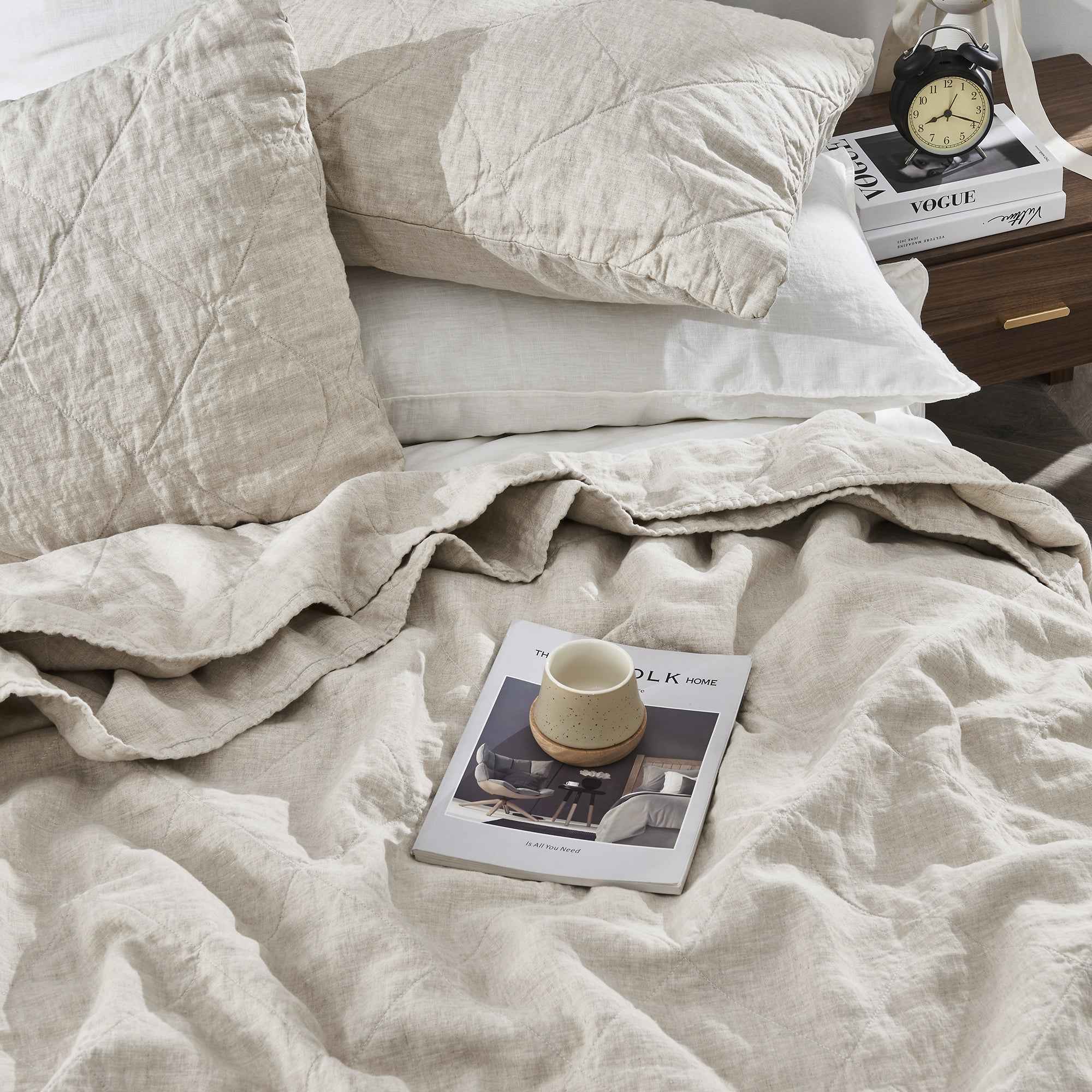
Transformez votre chambre en une oasis estivale. Explorez notre collection de lin légère et durable, y compris notre emblématique Naturally Raw, conçue pour offrir une respirabilité inégalée et un style brut intemporel.
[ Acheter la collection de lin d'été ]